Chapter 2
The Korean Traditional Wedding Ceremony
Sunday · 1 November 2026
Locations
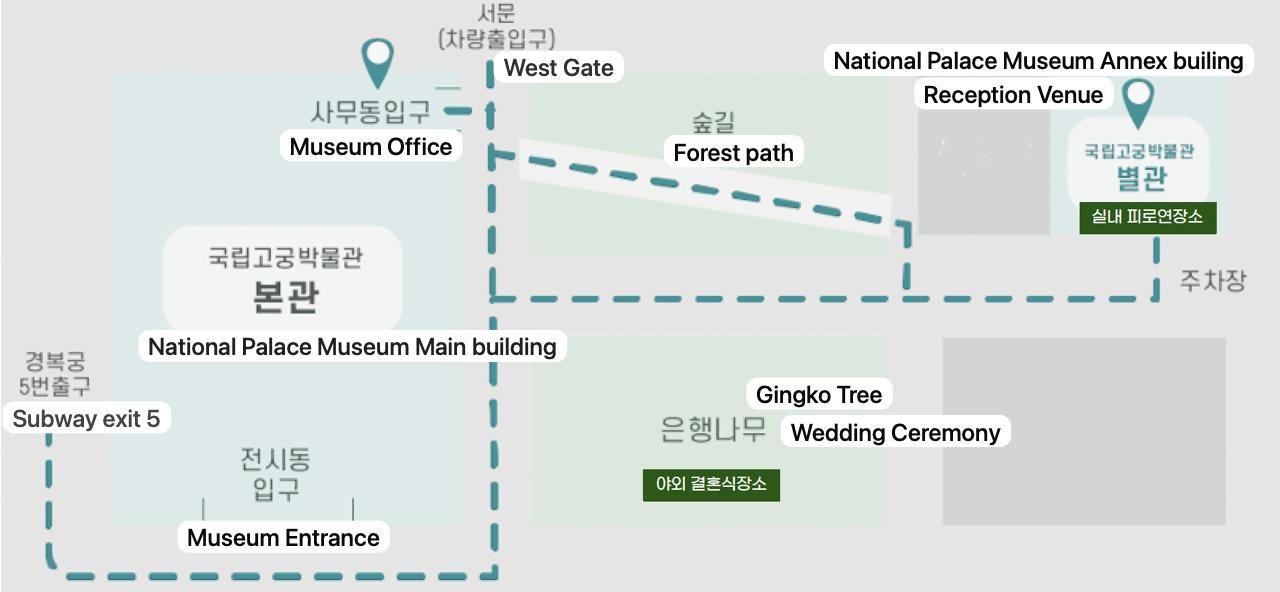
CeremonyBeneath a ginkgo tree that has stood for over a century, in front of the National Palace Museum of Korea — Gyeongbokgung Palace.
ReceptionAnnex Building, National Palace Museum of Korea.
Directions
Public transport Subway Line 3, Gyeongbokgung Station, Exit 5 — approximately a two-minute walk to the venue.
View on map →
Parking Gyeongbokgung Palace Parking Lot. Entrance on the left-hand side at the beginning of the road from Gwanghwamun towards Samcheong-dong.
View on map →
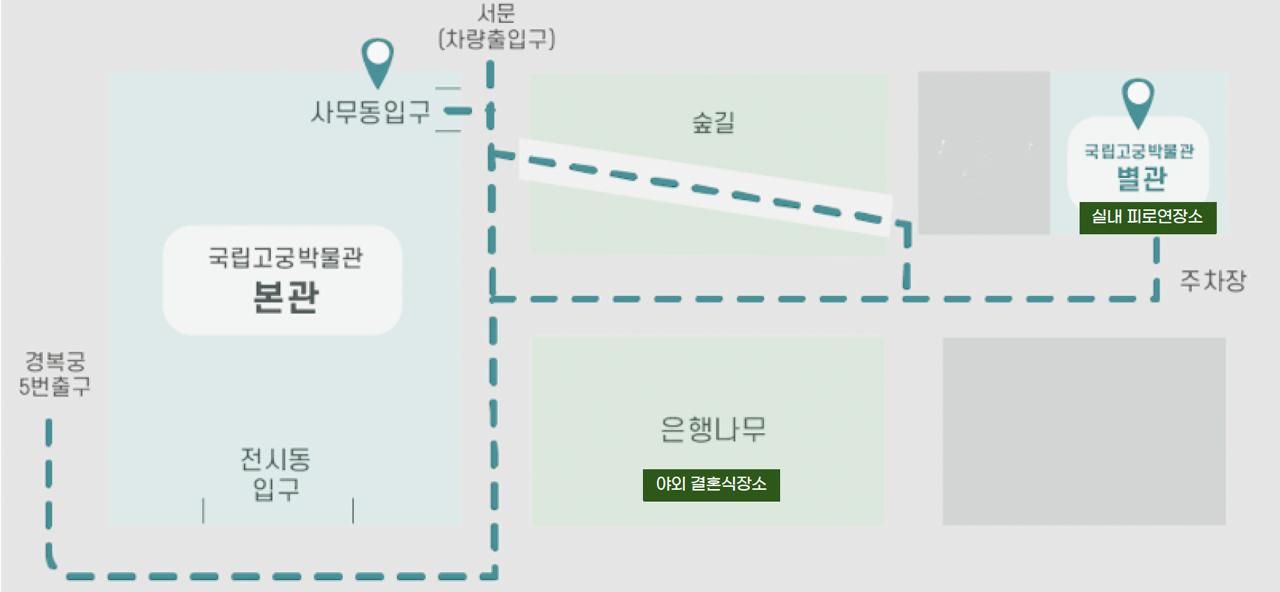
Map of the Ceremony & Reception Venues
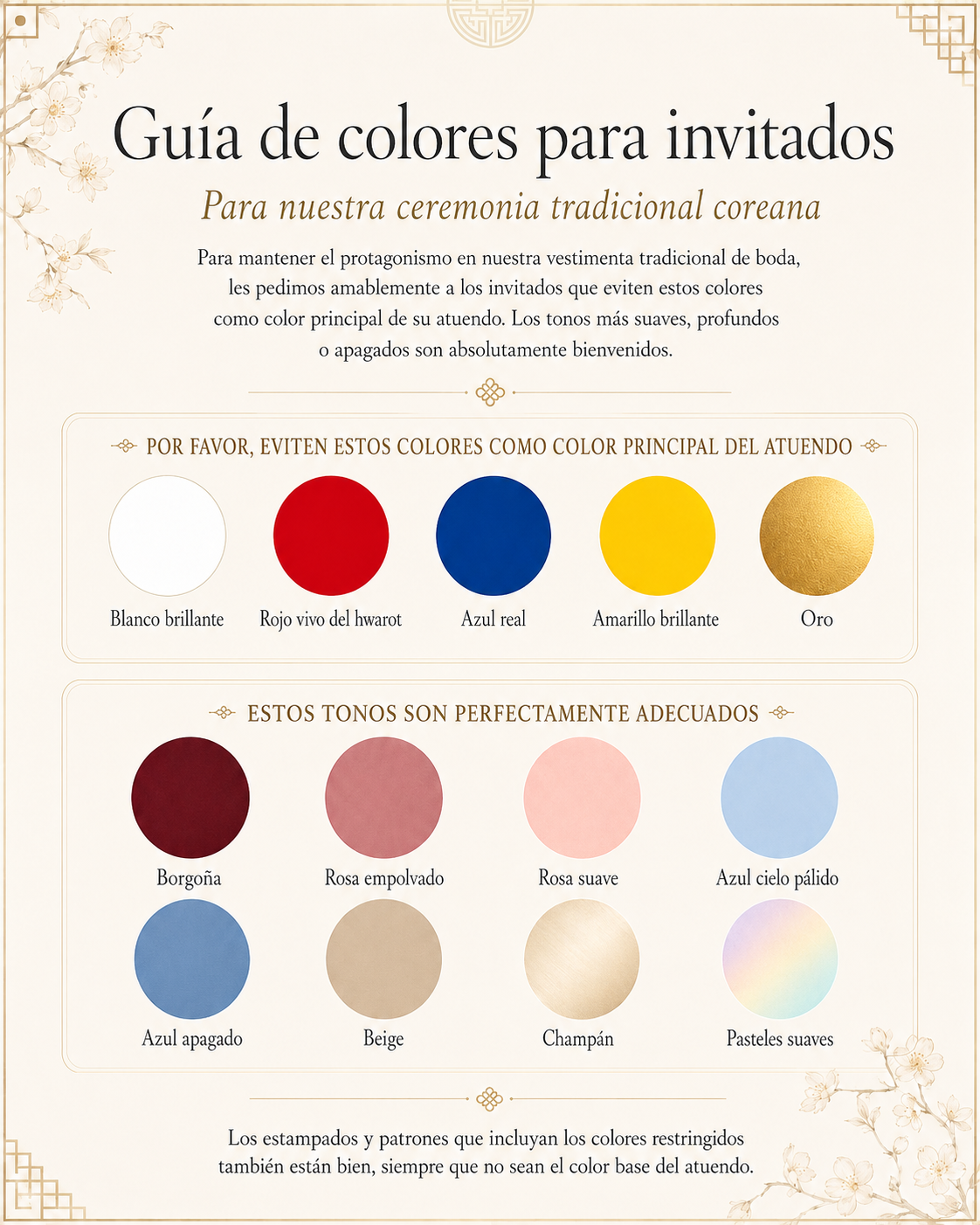
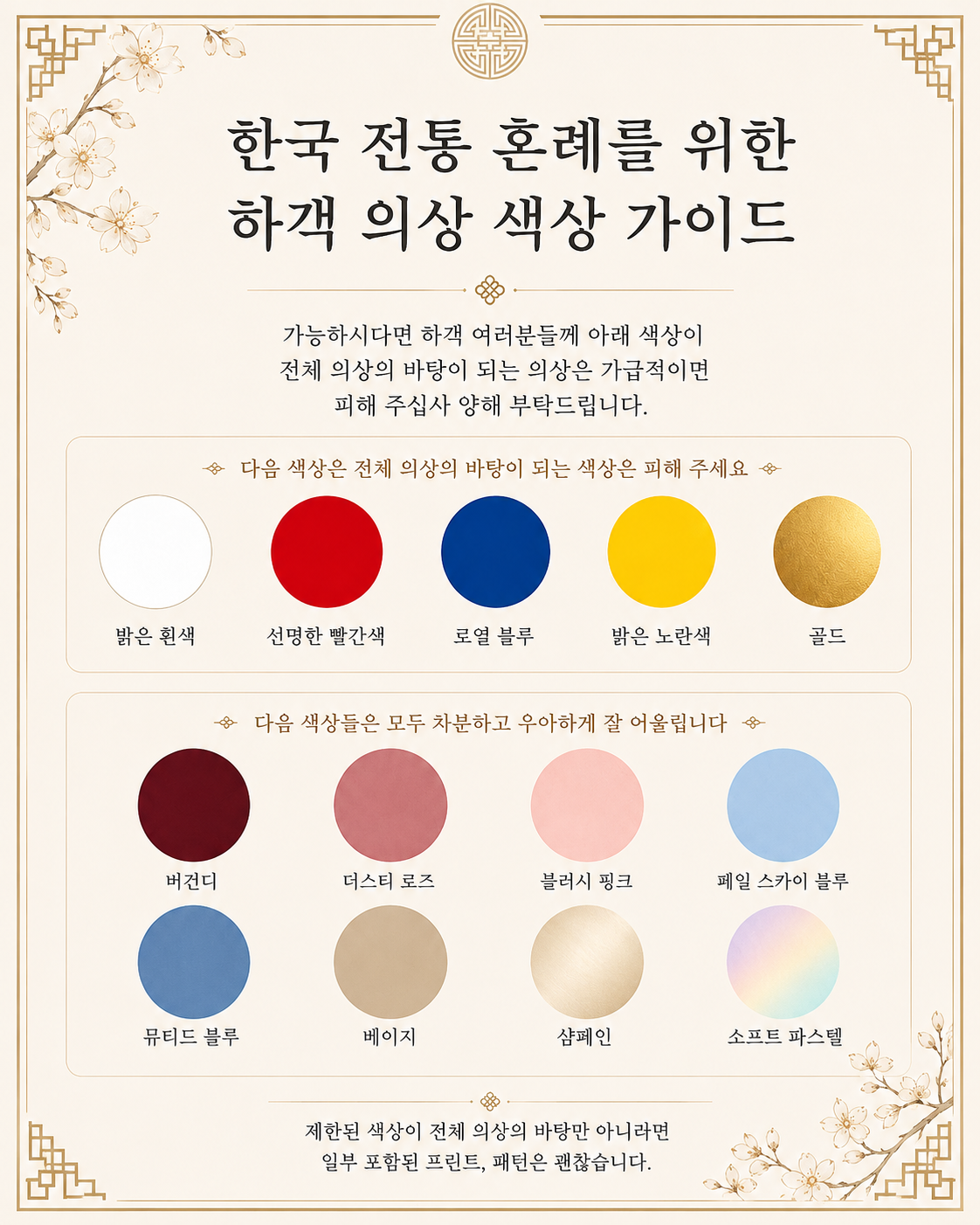
Dress CodeKorean 'hanbok' or formal attire.As our traditional Korean wedding attire will feature white, red, blue, and yellow, we kindly ask guests to avoid these colours as the main colour of their outfit, if possible.Prints or patterns that include these colours are completely fine, as long as they are not the base colour of your attire.

3:00 PM
Traditional Korean Wedding Ceremony & Celebratory Live Performances
Beneath the historic ginkgo tree
2:30 – 5:00 PM
Wedding Reception
Annex Building
Food and refreshments will be available throughout the afternoon, so please feel free to enjoy them anytime.
A Note on Korean Wedding and Reception CustomsWeddingWhen you arrive at our ceremony in Seoul, you will see a welcome table. Guests will be invited to sign the Guestbook and receive a meal ticket for the reception. You may also notice envelopes and a box for monetary wedding gifts, known in Korea as Chugui-geum (축의금).As we shared on our Registry page, your presence is truly the greatest gift to us. A monetary gift is by no means required or expected. However, should you wish to take part in this Korean wedding tradition, you are very welcome to do so as one of the optional ways to celebrate with us.There is no need to exchange money into Korean won. For those who would simply like to join in the custom, any currency is perfectly fine.We wanted to share this in advance so that none of our international guests feel uncertain or caught by surprise when they arrive.ReceptionIn Korean wedding culture, the reception meal is available before, during, and after the ceremony, rather than only afterwards. Guests are welcome to enjoy food and refreshments at their own pace, and moving between the ceremony and reception area is common and not considered impolite.Our traditional ceremony and palace reception will take place within precious cultural heritage grounds. In accordance with cultural heritage protection regulations, alcohol cannot be brought in or served during the ceremony or reception — we kindly ask for your understanding. To continue the celebration, we will move afterwards to a separate venue for our Moonlit Pungryu Soirée — an evening of drinks, music, performances, and the family we are becoming under the moonlight.
Optional Palace Experience
Royal Guard Ceremonies at Gyeongbokgung Palace
For guests who wish to arrive early and explore Gyeongbokgung Palace and the National Palace Museum of Korea before joining us, several Royal Guard ceremonies take place around the Gwanghwamun and Heungnyemun Gate areas. This is not part of the official wedding programme — just an optional palace experience for those who would like to enjoy more of Gyeongbokgung before the ceremony.
Royal Guard Public Training Session
9:35 AM / 1:35 PM · approx. 15 min
Royal Guard Changing Ceremony
10:00 AM / 2:00 PM · approx. 20 min
Gwanghwamun Gate Guard Ceremony
11:00 AM / 1:00 PM · approx. 10 min
Chapter 3
The Moonlit Pungryu Soirée
After the Ceremony & Reception
The final venue will be announced once we have confirmed the initial headcount. We are prioritising venues within walking distance of the ceremony; should it be more than a 15-minute walk away, transportation will be provided.
6:00 PM
Moonlit Korean Pungryu Soirée
An evening of live music, drinks, performances, and Korean Jeong — the warmth of care, affection, and connection — shared under the moonlight.
A Note on Pungryu & JeongPungryu (풍류) literally evokes "wind and flow" — living gracefully, like flowing water and a passing breeze, rather than forcing life against its natural course. It is an ancient Korean idea of cultured, free-spirited enjoyment: music, art, poetry, dance, drinks, nature, and good company, all shared in harmony with the natural world.Jeong (정) is a deep emotional bond and unspoken warmth that grows between people over time. It carries affection, caring, and a quiet sense of "us" — a feeling of community and connection.
Chapter 4
And Then, There We Were
Across Seoul and Beyond — Follow the Wind
For guests staying in Seoul after the wedding, we are planning optional group activities and experiences to enjoy together. Further details will be added here.